


CAPITOLA — New water rates for about 14,000 customers in Santa Cruz’s Mid County region are slated to take effect next month after receiving the green light from the provider’s governing board.
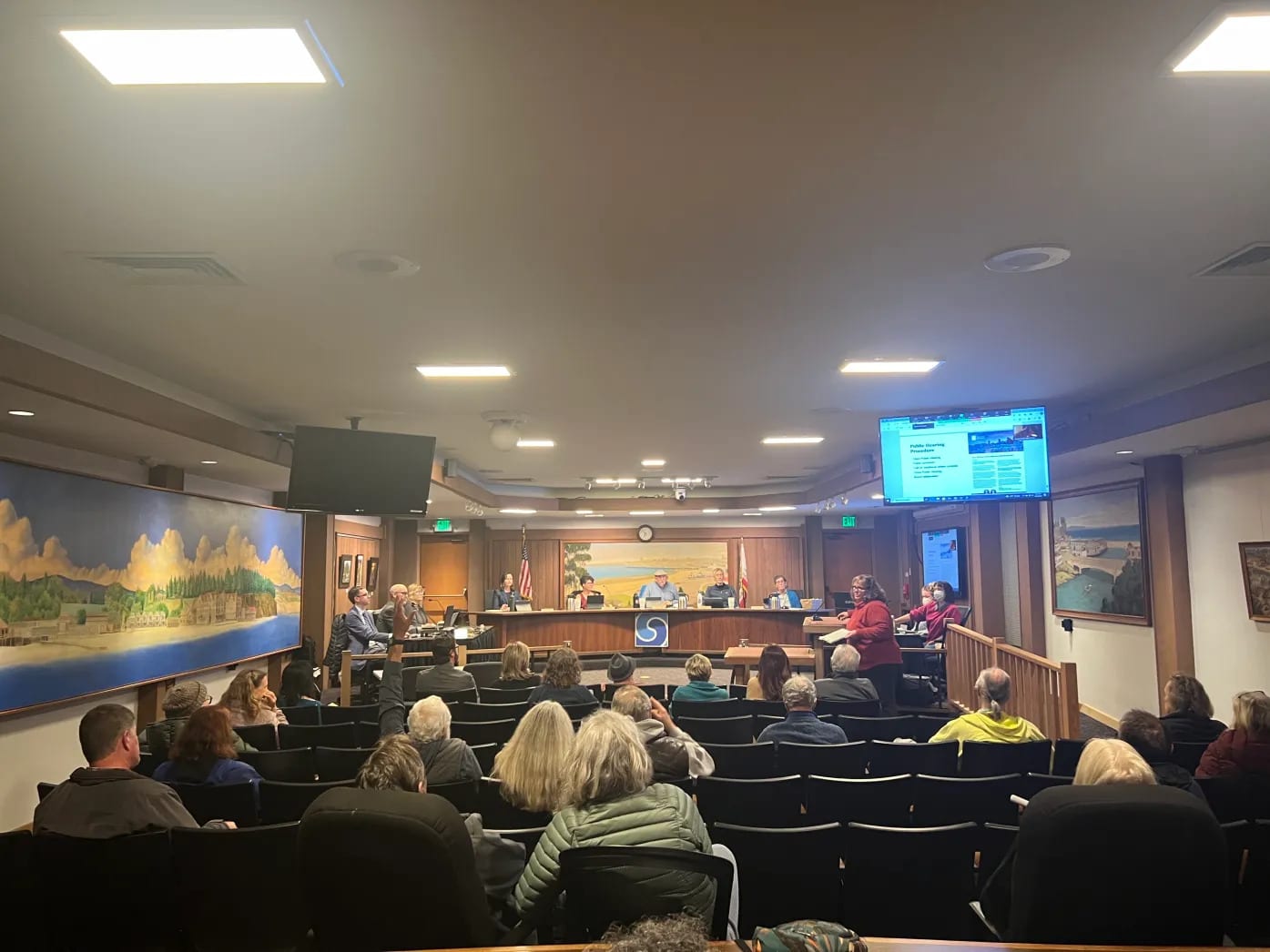
At its meeting Tuesday, the Soquel Creek Water District Board of Directors unanimously approved a new four-year rate increase plan that will be implemented March 1 for the district’s customers in Aptos, La Selva Beach, Opal Cliffs, Rio Del Mar, Seascape, Soquel and a portion of Capitola.
“I’m a ratepayer and my rates are going to go up,” said Board President Bruce Jaffe, also a candidate for 2nd District Santa Cruz County supervisor, before the vote at the Capitola City Council chambers. “This is an investment in the future and I’m willing to do that.”
The new rate structure, district officials have said, is designed to foster equity and fairness amid shifting needs as the district works to ward off seawater intrusion threatening the Santa Cruz Mid-County Groundwater Basin. For years, water has been drawn out of the basin faster than it can be replenished and the state has mandated that it be made sustainable by 2040.
The current structure was implemented in 2019 and penalized users that consumed more than the district’s sustainable rate of less than six units — about 4,488 gallons or 90 bathtubs — of water each month. Residential customers who use less than six units are charged $9.10 per month while those who use any more pay $41.23.
The new structure will establish three tiers: users consuming 3.99 units or less per month, users with four to 7.99 units and those using more than eight units. Tier 1 users will be charged $9.16, tier 2 is $10.27 and tier 3 is $16.22, with fees increasing incrementally for the remaining three years.
The district also seeks to even the scales when it comes to its fixed costs, which total more than 90%. The approved fixed fee per month for the first year of the plan for a 5/8 inch meter, the most common size for a single-family home, will go from $52.34 to $80.44.
Though Director Tom LaHue acknowledged no one likes increasing rates, he does view the new structure as increasing fairness.
“One of the things that bothered me in the previous rates is that a family of four would just necessarily bump into a really high tier,” said LaHue. “This takes care of that. Everybody is paying more in that service charge to pay for basin sustainability.”
But some customers are upset about the new rates, believing that they no longer encourage conservation and will negatively impact elderly or disabled customers who are on fixed incomes.
“I don’t understand why the households that use the least amount of water are going to get hit the hardest,” said Aptos resident Antonia Astone during public comment. “I was brought up to always conserve water and a policy that doesn’t respect the idea that water is a valuable resource that we must all conserve does not make sense to me.”
To stop the increase, more than 50% of district customers would have needed to submit a written objection to the new fees before the end of the public hearing. After tallying the letters received by Tuesday’s hearing, district staff announced 569 protests — some of which had not yet been verified — had been received, which was well short of the 7,127 needed to constitute a majority protest.
District officials have said that the current rates were designed to penalize high-usage customers as a means for, in part, funding sustainability projects such as Pure Water Soquel, which is capable of further purifying treated wastewater and injecting it into underground wells that replenish and protect the basin. The project is expected to come online later this year, securing a major supplemental water source that will set the basin on the path to sustainability, though officials stressed there is still much work to do before 2040.
Leslie Strohm, the district’s financial/business services manager, added at the meeting that the district received almost $100,000 through a state program a couple of years ago that went to financial assistance for customers in need and recently reapplied to that program. The district has also enrolled, Strohm said, in another state low-income household water assistance program that allows low-income customers to apply for one-time assistance from the state. The program is slated to sunset at the end of March, though Strohm has high hopes it will be renewed.
“Being conservation-minded is holistic. I think in the years past it has been a lot about using less and really restricting use,” said district Assistant General Manager Melanie Mow Schumacher at the meeting. “As we go forward we really want to embrace more of an environmental conservation sustainability mindset of not just using less but also about ways we can promote sustainability in many different ways.”
San Lorenzo Valley water
Soquel Creek isn’t the only agency that has increased prices in recent days.
The San Lorenzo Valley Water District approved, through a 4-1 vote, a rate increase of its own at a Feb. 15 board meeting. The new rates for water and Bear Creek Estates wastewater will also take effect March 1, according to a release from the district.
The revenues will help the district address impacts from the CZU Lightning Complex Fire, the COVID-19 pandemic, heavy storm damage from last winter and service to customers.
The rate increase will be spread across a five-year implementation plan and, similar to Soquel Creek, came after a nearly yearlong study and design process that included eight public meetings. The revenue will help fund both ongoing operating costs and major infrastructure improvements, according to the release.
Reference: Santa Cruz Sentinel